
'God has incredible plans for me and we'll see where that takes me.'

The Indian government has introduced a 0.4% transaction fee on Unified Payments Interface (UPI) payments exceeding Rs 2,000 for merchants, effective October 15, marking the end of nearly six years of free service. Person-to-person transfers and small-value transactions below Rs 2,000 remain free. The new Merchant Discount Rate (MDR) is capped at Rs 300 for transactions above Rs 75,000, with differentiated rates for essential sectors and investments, and safeguards to prevent costs from being passed to consumers.

The government is introducing a 0.4% Merchant Discount Rate (MDR) on UPI person-to-merchant payments above Rs 2,000, effective October 15. This move ends the zero-MDR regime, aiming to fund UPI infrastructure and sustainability, as the previous government subsidy was insufficient to cover operational costs. Payments between individuals and most everyday merchant transactions will remain free.
Tax experts clarify that merchants will pay 18% GST on Merchant Discount Rate (MDR) for UPI payments exceeding Rs 2,000, effective October 15. However, registered merchants can claim Input Tax Credit (ITC), mitigating the tax burden. This move is expected to generate significant GST revenue for the exchequer while funding payment infrastructure.
India's UPI system continues its rapid growth, dominating retail payments. Recent amendments to the Payment and Settlement Systems Act allow for targeted Merchant Discount Rates (MDR) on high-value merchant transactions, aiming to create a self-sustaining revenue model for the ecosystem while keeping P2P and low-value payments free. This move could generate significant revenue and encourage ecosystem participation.

'Credit to the Japan team for taking on the challenge and putting up a fight.'

Sebi Chairman Tuhin Kanta Pandey has defended the newly rolled out Closing Auction System (CAS), stating that it is a transparent mechanism and that the industry needs time to understand the change. He acknowledged initial turbulence and concerns from fund houses but noted an increase in mutual fund participation.

India may have a vast coastline and a strategic location, but it will become a true maritime nation only when its people understand, value and actively participate in the maritime ecosystem, asserts Vice Admiral Biswajit Dasgupta (retd).

During the 18th BRICS Summit in New Delhi, Chinese President Xi Jinping and Prime Minister Narendra Modi held a bilateral meeting, outlining a four-point approach for the steady and long-term development of China-India relations. The leaders stressed strategic understanding, win-win cooperation, mutual respect, and inclusive multilateral engagement, reaffirming their commitment to resolving the boundary question and addressing economic concerns. They also discussed global challenges and strengthening people-to-people ties.

The Ministry of External Affairs stated that India's participation in the 2027 SAF Games in Pakistan will be guided by the sports ministry's policy, which permits Indian athletes to compete in events with Pakistani participants and vice-versa. Separately, the MEA also commented on the ongoing legal proceedings for seven foreign nationals, including a US citizen and six Ukrainians, who were recently chargesheeted by the NIA for illegal entry and movement, though not under UAPA at this stage.

Digital money is gradually starting to behave like software. It's no longer inert -- sitting passively in accounts. In the not-so-distant future, your money could become 'smart' and 'active,' understanding your preferences, paying your bills automatically, optimising your returns, and managing your risks -- all without you having to manage the details.

President Donald Trump is set to sign the Sanctioning Russia and Iran Act, which includes tariffs on countries buying Russian oil and gas, such as India. India has voiced concerns over the potential impact on its ties with the US and the global energy market.

India is making a significant push to establish itself as a global semiconductor manufacturing hub, driven by strategic investments and policy support. The upcoming SEMICON India 2026 event will showcase the country's advancements and ambitions in this critical industry, which underpins virtually all modern electronic devices and has faced global supply chain vulnerabilities.

India continued to add to its medal tally at the Asian Games, primarily through shooting, but a gold medal remained elusive. Suchika Tariyal secured India's first-ever MMA medal, a bronze, despite a heartbreaking weigh-in technicality. Other sports like badminton, hockey, and table tennis saw strong performances, while swimming faced disappointment.

State-run Oil and Natural Gas Corporation (ONGC) has made a significant gas discovery in the deep waters of the Mahanadi Basin off the Odisha coast, recording encouraging flow and sustained reservoir pressure, a breakthrough for India's deepwater exploration programme.

The Indian government has officially declared the Pakistan-based Shahzad Bhatti Network (SBN) a terrorist organisation under the Unlawful Activities (Prevention) Act (UAPA). This action, announced by Union Home Minister Amit Shah, targets a group involved in cross-border smuggling of arms, explosives, and narcotics, as well as inciting youth into terrorism and spreading hateful digital content. SBN is accused of threatening India's democratic structure, communal harmony, and internal security.

Indian Teqball players Declan Marshall Gonsalves and Mohamed Anas Imran Beg were eliminated from the men's doubles competition at the Asian Games after losing both their group matches.

RSS leader Atul Limaye has sparked controversy by alleging that foreign and political elements infiltrated the Cockroach Janata Party's NEET-UG paper leak protest at Jantar Mantar.
Salesforce executives, including South Asia CEO Arundhati Bhattacharya, predict a significant shift in India towards wider enterprise AI adoption, moving from experimentation to production deployments. The company plans to invest in physical infrastructure and talent upskilling in India. Salesforce's vision for the "agentic enterprise" involves a four-layer architecture, emphasising the need for robust security and governance for autonomous agents. Executives also highlighted the evolving nature of jobs, with AI handling repetitive tasks and creating new specialised roles, positioning India as a potential leader in agentic innovation by 2030.

India has stated its commitment to protecting its economic interests and ensuring energy security after the US House of Representatives passed a bill allowing the US President to impose tariffs of up to 100 per cent on countries, including India and China, for purchasing Russian crude oil. The Ministry of External Affairs affirmed India's resolve to maintain diversified energy sourcing and has articulated its concerns to US interlocutors regarding the bill's potential implications.

UST, a California-based technology company, highlights India's unique opportunity to build an AI-native semiconductor ecosystem, bypassing older models. Speaking at SEMICON India 2026, UST COO Gilroy Mathew emphasised India's advantage in investing in infrastructure and talent at the right time, enabling it to create AI-native manufacturing and supply chains for future competitiveness.

India's Quimcy Joaquim Dsouza has reached the women's singles semifinals in Teqball at the Asian Games, securing a chance for the country's first-ever medal in the sport. She defeated top-seeded Yuina Sakamoto and Cambodia's Koemyean DY to top her group, and a win in the semifinals will guarantee a historic medal.

The Japan Cricket Association (JCA) is set to host its first-ever T20I against reigning world champions India, a landmark event expected to significantly elevate cricket's profile and drive its long-term growth in Japan, according to JCA COO Alan Curr.

Chinese Foreign Minister Wang Yi stated that President Xi Jinping and Prime Minister Narendra Modi reached a crucial consensus during the BRICS summit, agreeing that China and India should be partners, not rivals. The leaders pledged to maintain peace and tranquility in border areas, deepen cooperation, and support each other in multilateral forums, aiming to strengthen the Global South and promote a multipolar world order.

The US House of Representatives has passed the Lindsey O Graham Sanctioning Russia and Iran Act of 2026, authorising President Trump to impose sanctions on Russia's energy sector and tariffs on countries like India and China that purchase Russian oil and gas. The legislation aims to curb Russia's ability to evade existing sanctions and reduce global dependence on its energy exports, despite some Democratic opposition to increased tariff authority for the President.

Indian teqball player Quimcy Dsouza lost a hard-fought bronze medal match to Japan's Yuina Sakamoto at the Asian Games in Nagoya. Dsouza showed a strong comeback, taking both sets to a narrow 11-12 finish, but ultimately fell short.

The Federation of Indian Pilots (FIP) has urged India's Aircraft Accident Investigation Bureau (AAIB) to conduct a comprehensive evaluation of the Boeing 787's electrical systems during its probe into the fatal Air India crash of June 2025. This call follows concerns raised by the Foundation of Aviation Safety regarding chronic system failures and the central role of electrical architecture in the B787 design. The crash, involving a Dreamliner VT-ANB, killed 260 people, and FIP emphasizes the need for detailed examination of all electrical and electronically controlled systems.
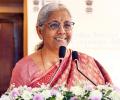
Finance Minister Nirmala Sitharaman stated that India is likely to sustain economic growth of 7 per cent or more in 2026-27, continuing the pace recorded since the Covid-19 pandemic, despite geopolitical uncertainties and supply-chain disruptions.

India's singles players Sumit Nagal and Dhakshineswar Suresh face challenging conditions in their Davis Cup Qualifier Round 2 tie against South Korea. The hosts have prepared a slow, low-bounce court with heavy balls to negate India's strengths. Captain Rohit Rajpal is confident in the team's ability to adapt and strategize, emphasizing the importance of flexibility and exposing younger players to high-pressure situations.

The Finance Ministry has dismissed allegations of US pressure influencing the 0.4% Merchant Discount Rate (MDR) on select UPI transactions. It clarified that NPCI guidelines prioritise RuPay credit cards on UPI and do not favour international cards. The ministry also asserted that the MDR, applicable to person-to-merchant transactions above Rs 2,000, is unlikely to increase cash transactions or cause inflation, with measures in place to prevent burdening consumers.

India successfully facilitated a significant diplomatic meeting between Iranian President Masoud Pezeshkian and UAE Crown Prince Sheikh Khaled bin Mohamed bin Zayed Al Nahyan on the sidelines of the BRICS Summit in New Delhi. This interaction, a diplomatic breakthrough given ongoing West Asia conflicts, occurred as BRICS adopted a declaration urging restraint and protection of civilians in the region, highlighting the bloc's commitment to peace and stability.

A new study reveals that approximately 70 per cent of the year-to-year variation in winter air pollution across northern India can be explained by the frequency of western disturbances. These storm systems, originating from the Mediterranean, help clear pollution through precipitation and ventilation. The findings suggest that predicting the frequency of these disturbances could provide advance warning of severe pollution, allowing for better preparedness and implementation of control measures.

The BRICS New Delhi Declaration has endorsed India's proposals for a Working Group on Sports Technology and a Sports Goods Manufacturing Conclave, aiming to enhance cooperation and innovation among member nations in the sports sector.

Indian kabaddi star Pawan Sehrawat, known as the 'High Flyer' for his six-foot jumps, shared the origin of his nickname and his journey in the sport. He also expressed pride in being a flag bearer and India's ambition to defend its Asian Games gold medal in kabaddi.

The Reserve Bank of India (RBI) is planning to extend tokenisation to various financial asset classes, building on its successful trials with certificates of deposit (CDs). This move aims to enhance the efficiency of issuance, trading, and settlement of financial assets, leveraging blockchain technology and wholesale Central Bank Digital Currency (CBDC) for atomic settlements.
The Indian Air Force (IAF) demonstrated 'Vayu UTtaM', an indigenously developed multi-mode Unmanned Traffic Management (UTM) system, at 'Dronathon 2026' in Pokhran. This ground-based system is designed to manage drone operations in congested airspace and identify rogue drones, with applications extending to critical infrastructure, civil aviation, and public safety. The event also saw the release of the 'IAF UAS Roadmap' to guide indigenous innovation in unmanned systems.
India's markets regulator Sebi has launched 'Demat 2.0', a pilot project for tokenisation of corporate bonds, enabling atomic settlement through integration with RBI's wholesale CBDC. This new market infrastructure uses Distributed Ledger Technology (DLT) to make bond issuance, trading, and settlement faster and more efficient. India is the first country to issue corporate bonds natively on a distributed ledger with central bank digital currency settlement. Additionally, RBI Governor announced new UPI innovations: 'Tap & Pay' for faster POS transactions and MyUPI, an AI-powered customer support solution.

India is actively integrating payment system harmonisation into its Free Trade Agreement (FTA) negotiations, especially with countries hosting a large Indian diaspora. This strategy aims to leverage India's growing fintech ecosystem, facilitate cross-border financial services, and position India as a global hub for financial services exports, particularly through platforms like GIFT City.

Wushu player Divyanshi Choudhary has accepted the national federation's decision to drop her from the Asian Games squad due to an ACL tear.
India's MSME sector faces a significant formal credit gap of approximately Rs 60 lakh crore, with traditional channels meeting only a fraction of the demand. A new report suggests that a centralised, interoperable digital layer could effectively bridge this gap and enhance productivity across the formal business sector by digitising workflows and enabling cash-flow-based underwriting.
